Research
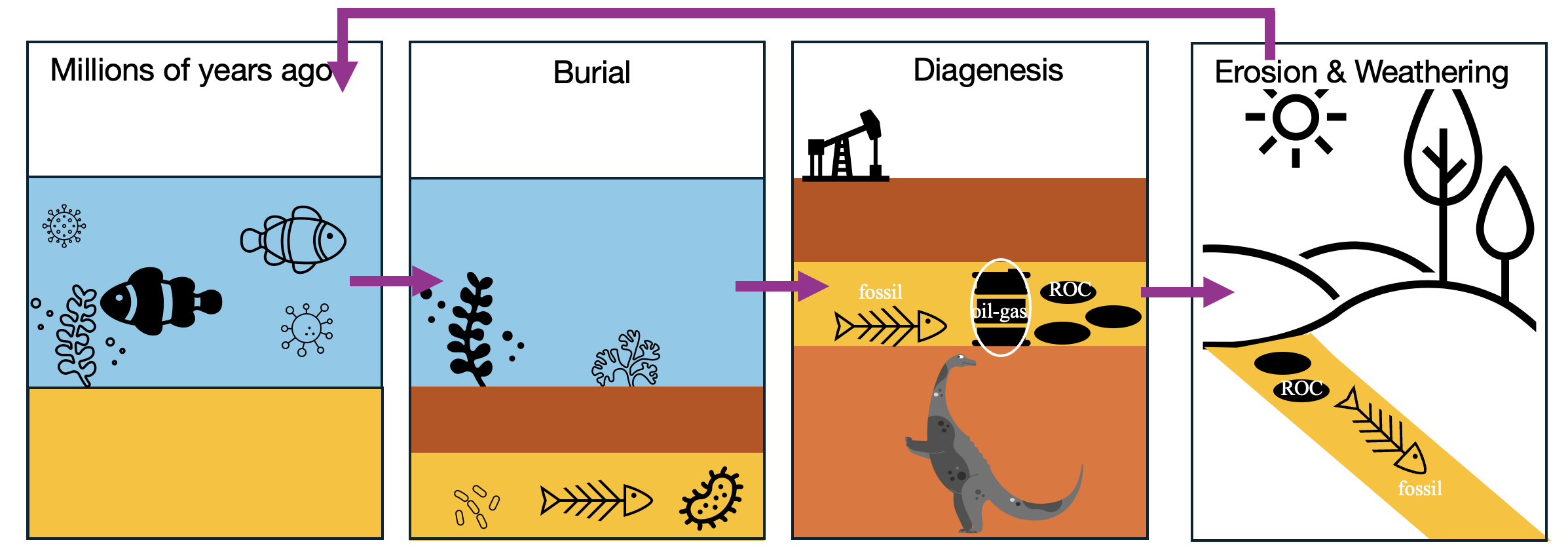
The life cycle of sedimentary rocks is closely related to Earth's surface processes and biogeochemical cycling. Over geologic timescales, the formation and breakdown of sedimentary rocks can regulate atmospheric CO2 and O2 levels, influencing planetary habitability. My research integrates microanalytical and bulk-rock approaches to examine how sedimentary rock (particularly organic carbon-bearing mudstone) geochemistry evolves during deposition, burial (and diagenesis), and weathering.
Deposition
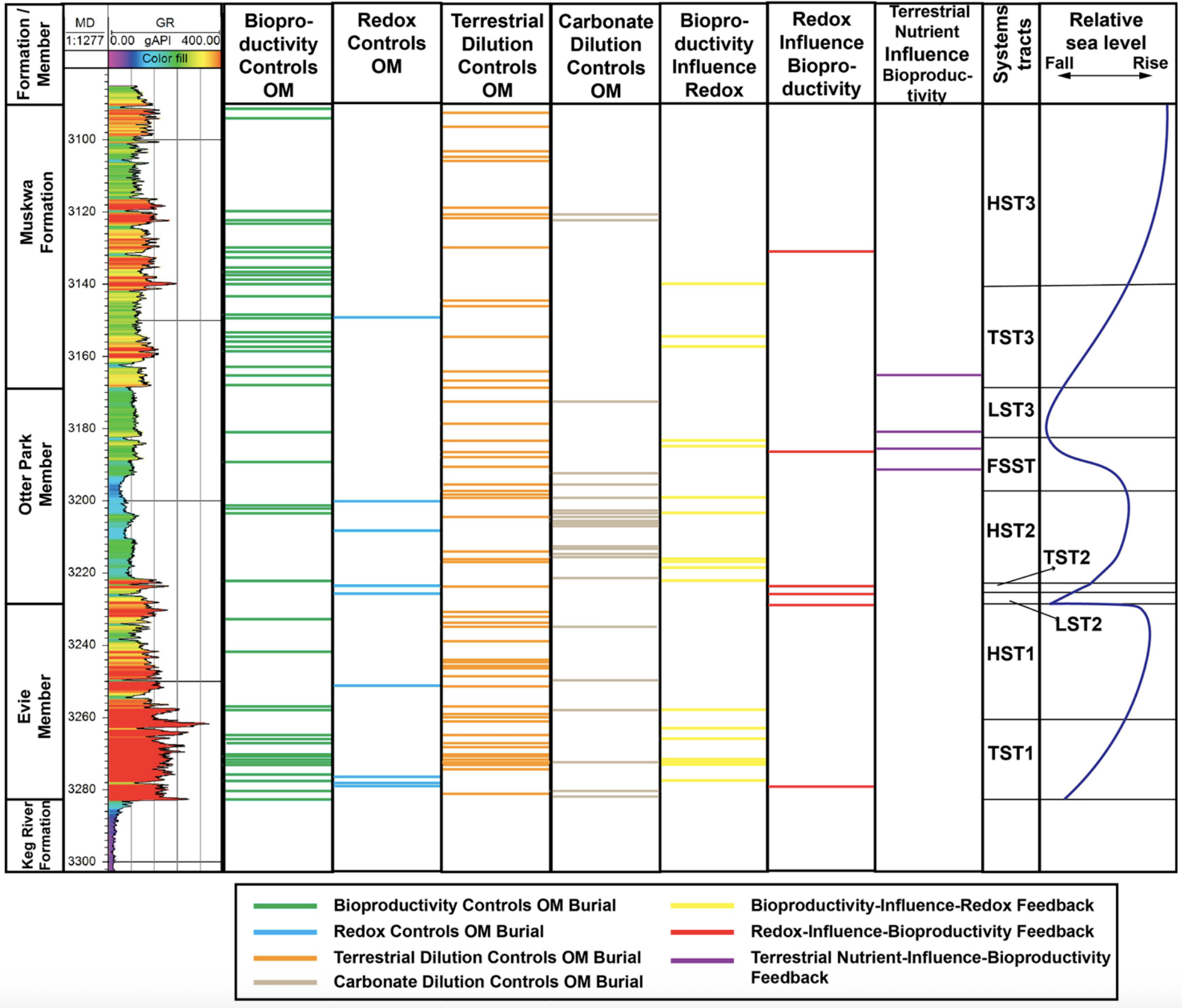
Multiple controls on organic carbon accumulation in mudstones, from Zhou et al. 2021, GSAB.
During deposition, sediment, the precursor of mudstone, can store organic carbon (OC) from terrestrial and marine inputs. In order to explore the primary controls on OC accumulation during deposition, along drilled cores of the Middle and Upper Devonian Horn River Formation (mudstone), I use benchtop XRF to analyze major elemental concentrations at mm-scale resolution, complemented by bulk-rock geochemical analyses using ICP-MS at the meter scale. These data show that redox conditions, sedimentation, and bioproductivity exert varying controls on OC burial across stratigraphic intervals. Importantly, the inferred primary controls on OC accumulation depend on the spatial scale of analysis and on whether a stratigraphic framework is applied.
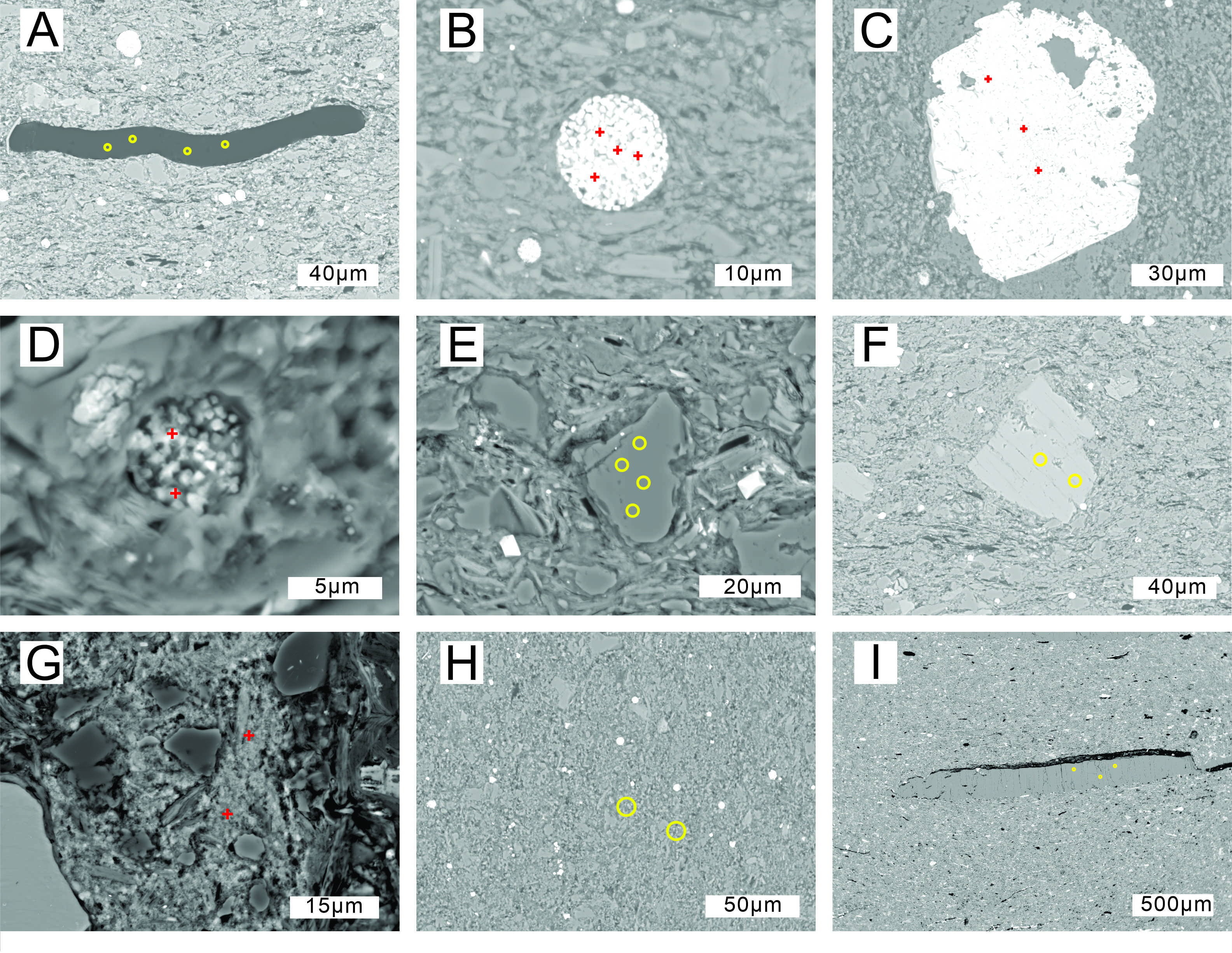
EPMA spot analysis on individual phases for mirco-scale Mo distribution, from Zhou et al. 2024, GCA.
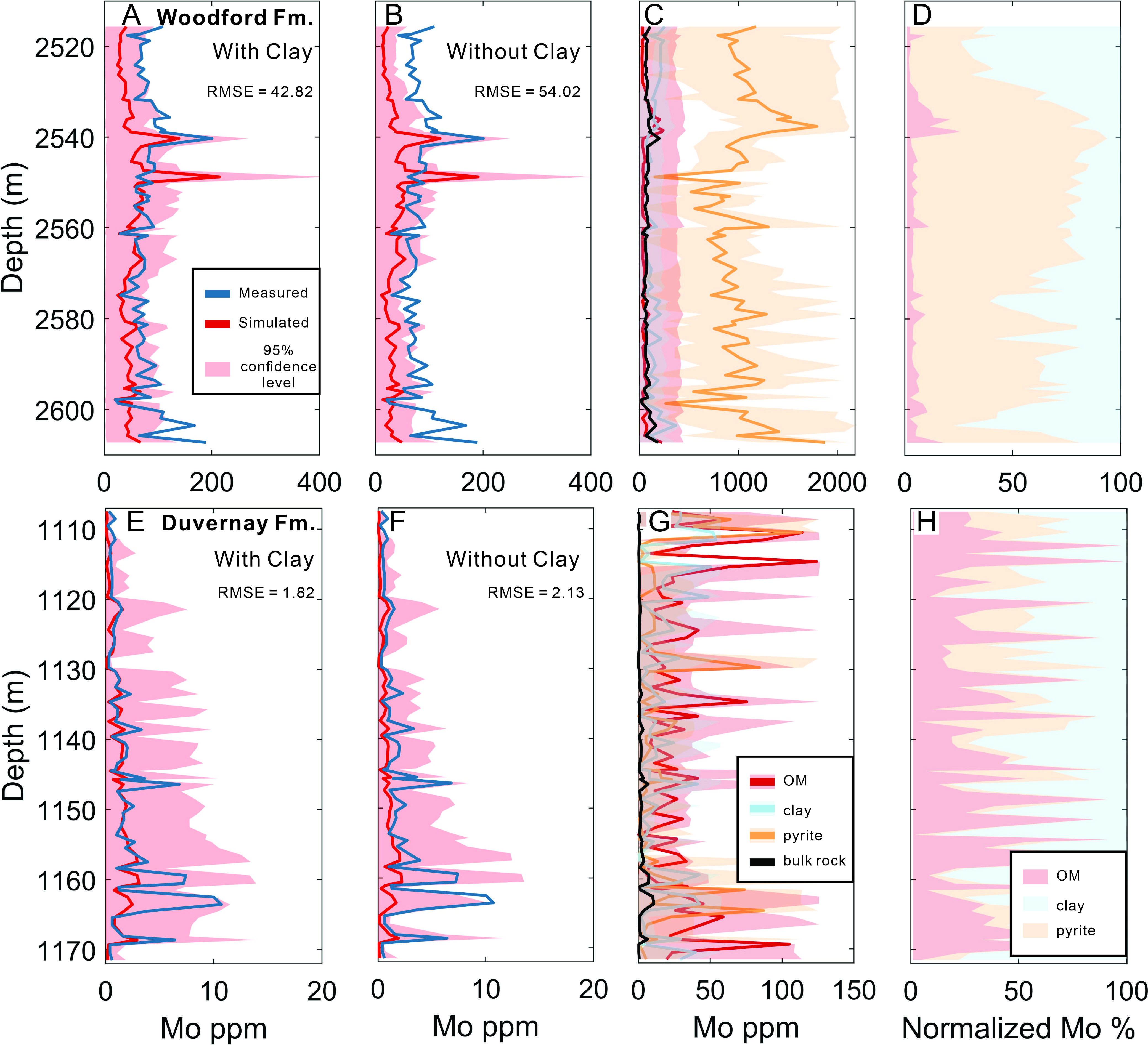
Bulk Mo concentration from direct measurements and end-member calculations to reflect multiple controls on Mo enrichment in mudstones, from Zhou et al. 2024,, GCA.
Redox conditions are a key control on OC preservation during deposition and are commonly reconstructed using redox-sensitive trace elements such as molybdenum (Mo). Mo is preferentially enriched under euxinic conditions, but Mo accumulation is also influenced by factors like mineral hosts, Mo availability in the water column, and early diagenetic processes, complicating paleoredox interpretations based on bulk-rock Mo concentrations alone.
To better constrain the mechanisms controlling Mo accumulation, I combine bulk-rock Mo concentrations (ICP-MS) with mineral-specific, micro-scale Mo distributions (EPMA) in an end-member mixing framework. This allows the relative contributions of redox conditions, mineralogy, and diagenesis to be quantified across mudstones from a wide range of depositional settings and geological ages, improving reconstructions of depositional redox conditions and interpretations of OC preservation.
Burial and Diagenesis
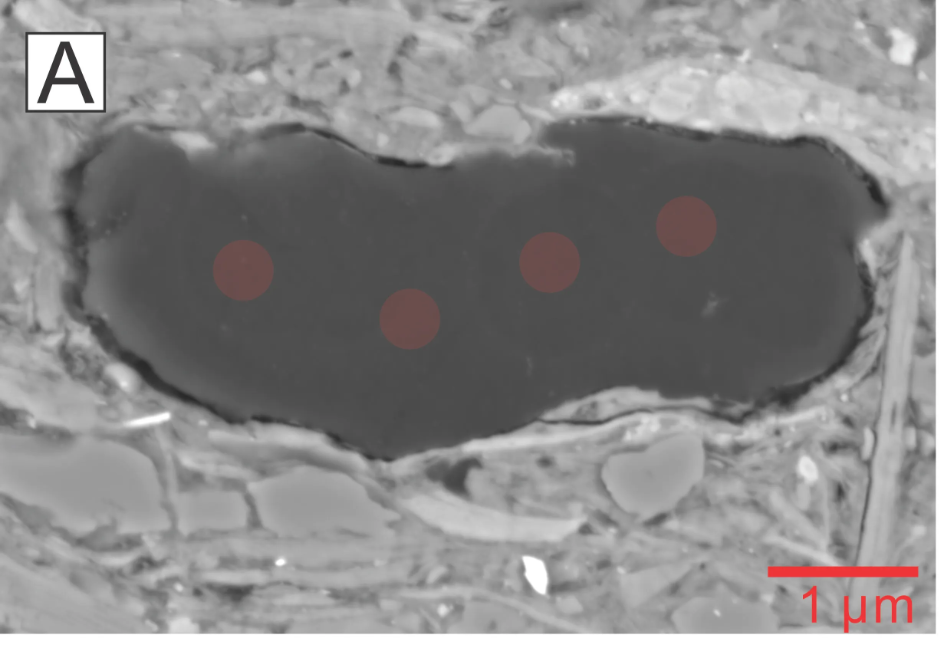
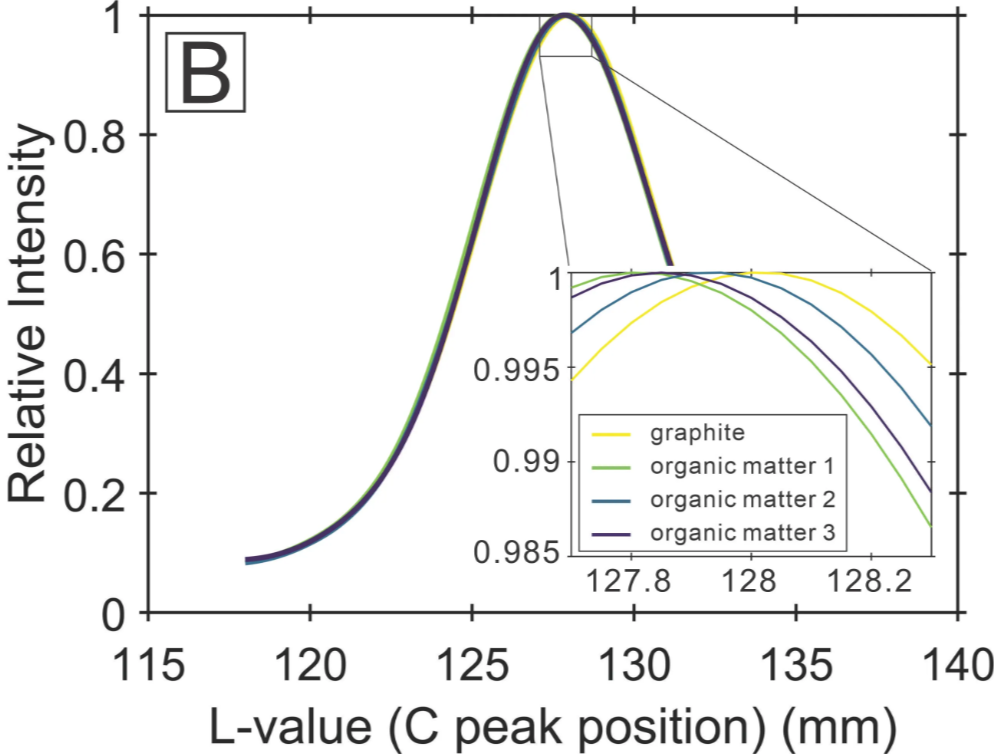
EPMA WDS analysis of individual organic grains in mudstons. Note the carbon peak position shift between organic matter (B), which can indicate different thermal maturity/graphtization, from Zhou et al. 2025, GGR.
After deposition, sediments undergo chemical and physical alteration during burial (diagenesis), leading to thermal maturation of sedimentary organic matter and the formation of mudstone. This process transforms OC into a more inert and recalcitrant form, making mudstone-derived OC substantially less reactive than biospheric OC and resulting in slower oxidative respiration during later weathering.
To quantify the thermal maturity of mudstone organic matter as a proxy for OC reactivity, I develop and calibrate a non-destructive microanalytical approach(based on WDS scan in EPMA). By analyzing both grain-scale and bulk-rock elemental compositions across samples spanning a wide maturity range, I observe that the mean nominal oxidation state of OC systematically evolves toward more aromatic and graphitic compositions with increasing maturity. However, molecular-level variability persists along this trend, indicating that organic matter transformation during maturation is complex and not strictly monotonic at the molecular scale.
Weathering (Ongoing Work)
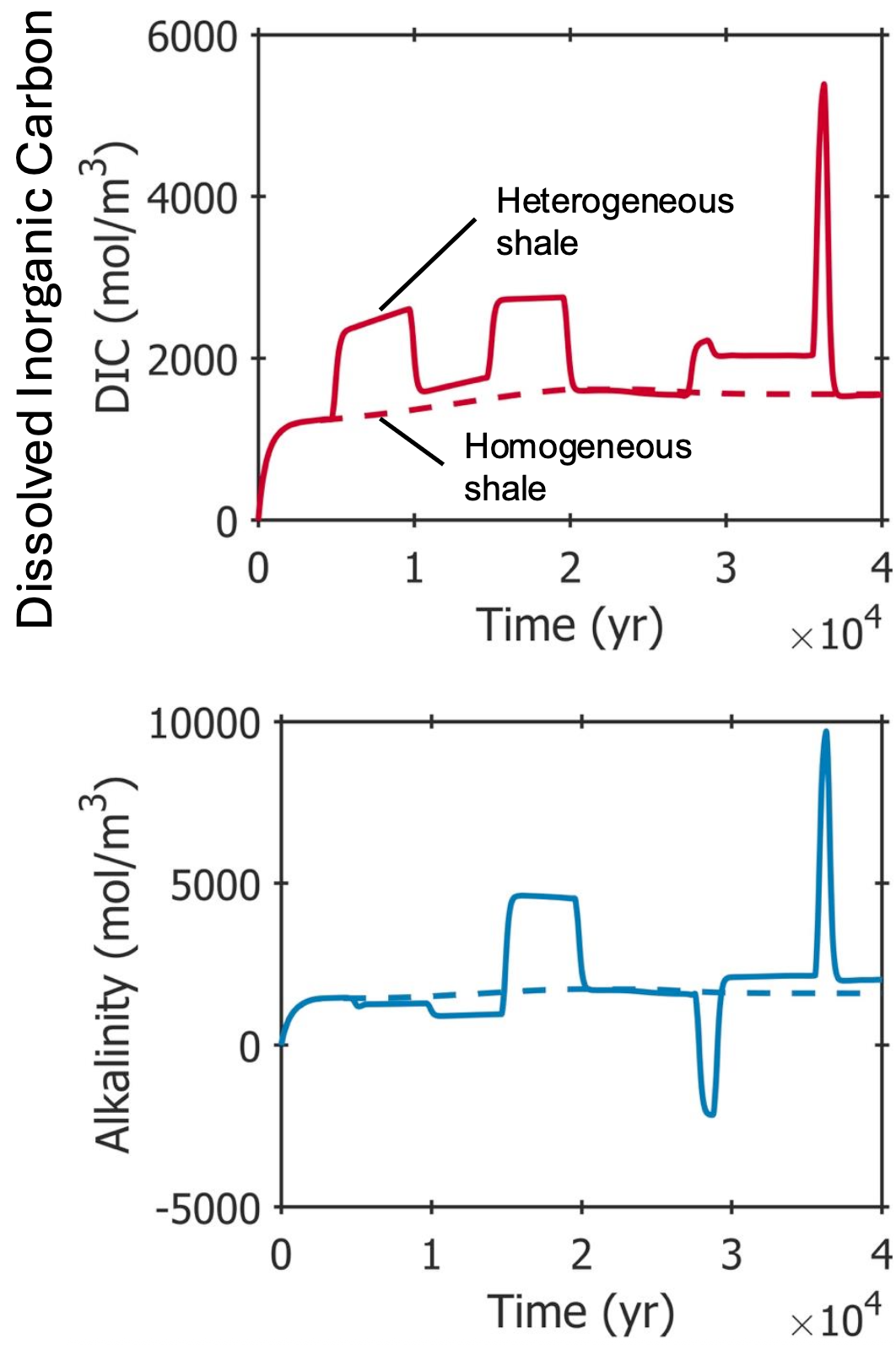
Comparison of dissolved inorganic carbon (DIC) and alkalinity budget from mudstone weathering (single site scale). Considering stratigraphy in weathering can strongly influence CO2 budgets compared to homogeneous rocks, from Zhou et al. in prep.
Upon tectonic uplift, buried mudstone undergoes chemical weathering near the surface, directly affecting the atmospheric CO2 and long-term C cycling. Oxidative weathering of mudstone OC and sulfide minerals, which is associated with carbonate dissolution, produces CO2, whereas silicate weathering generates alkalinity that can remove CO2. Mudstone stratigraphic variability shapes the distribution of these minerals and therefore the sign and magnitude of net CO2 flux from weathering.
I study geochemical and mineralogical heterogeneity (XRD, SEM, ICP-MS, ICP-OES) in three drilled cores from the Eocene Cozy Dell mudstone (Santa Ynez Mountains, California) and use these data to calibrate a one-dimensional reactive-transport model of heterogeneous mudstone weathering. Sensitivity tests that vary uplift rate, water saturation in the weathering zone, water infiltration rate, mineralogical variability, and OC reactivity show that a single site can alternate between being a net CO2 source or sink over time. This modeling framework is designed to be scalable to other mountainous regions with different geological backgrounds.
My current postdoc project plans to (1) improve the constraints on OC oxidation rate and (2) quantify regional CO2 flux.
Other research interests: critical zone, redox-sensitive metal behavior under different redox conditions, enhanced rock weathering, and paleoenvironment reconstruction
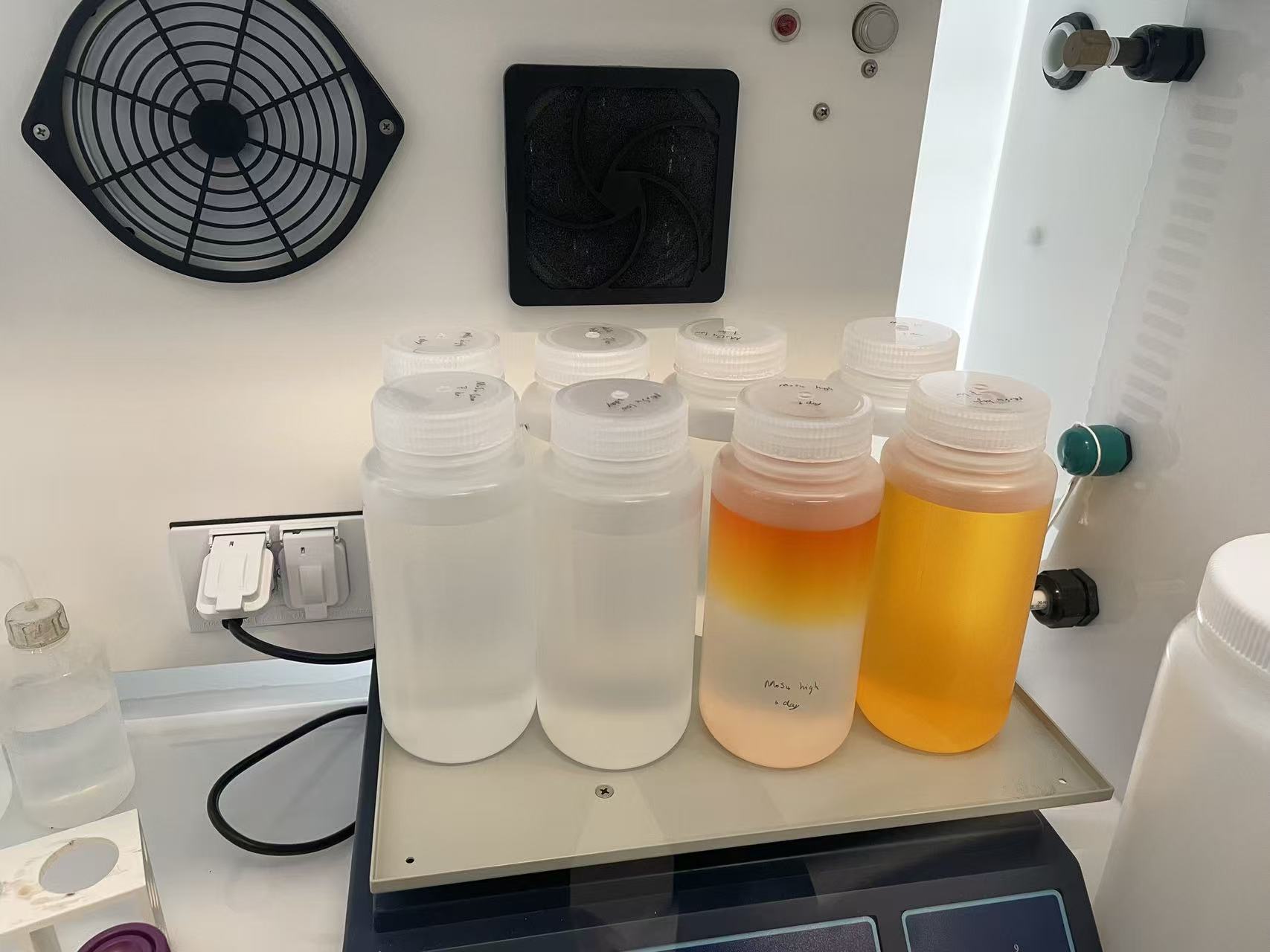
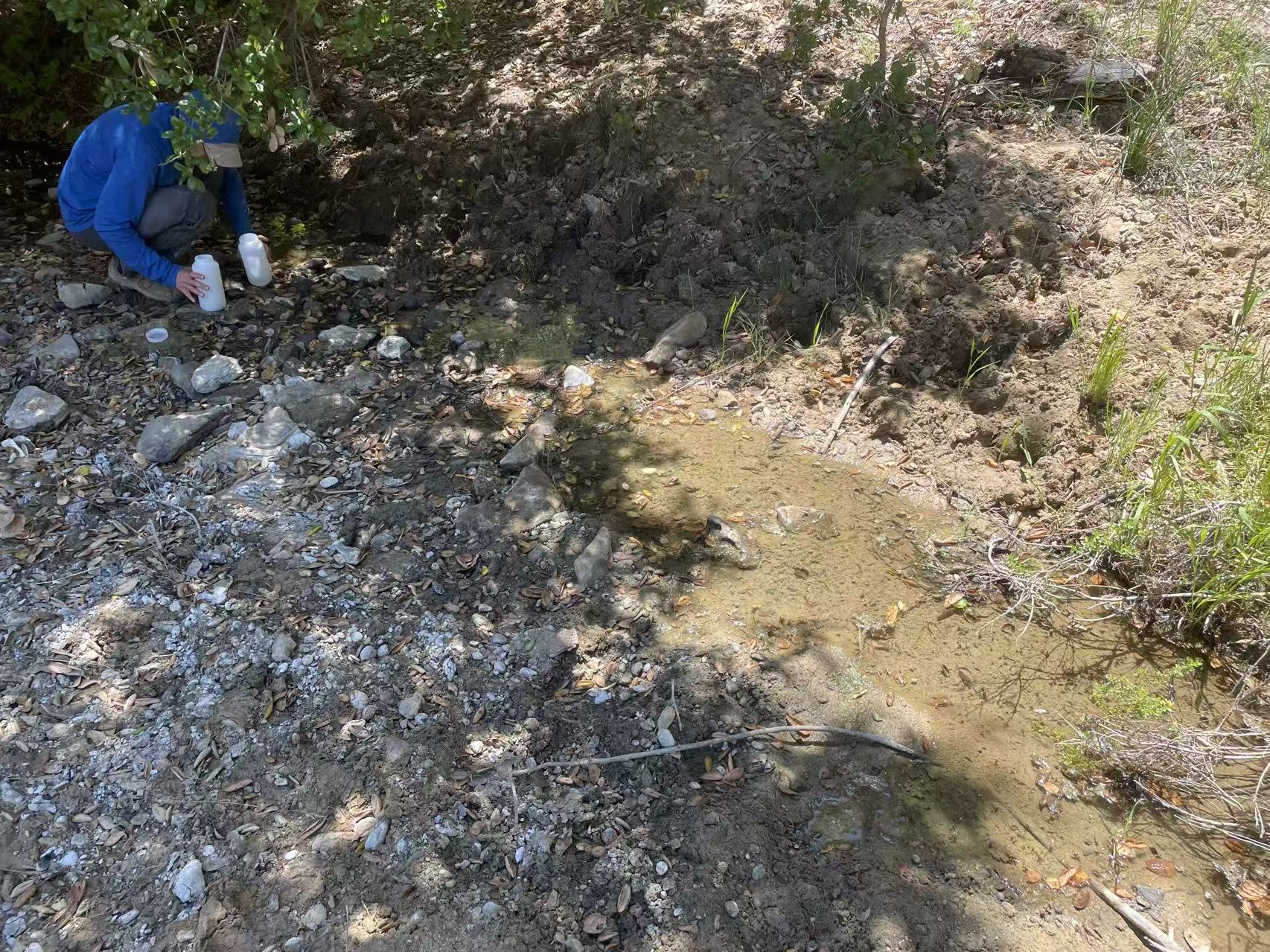
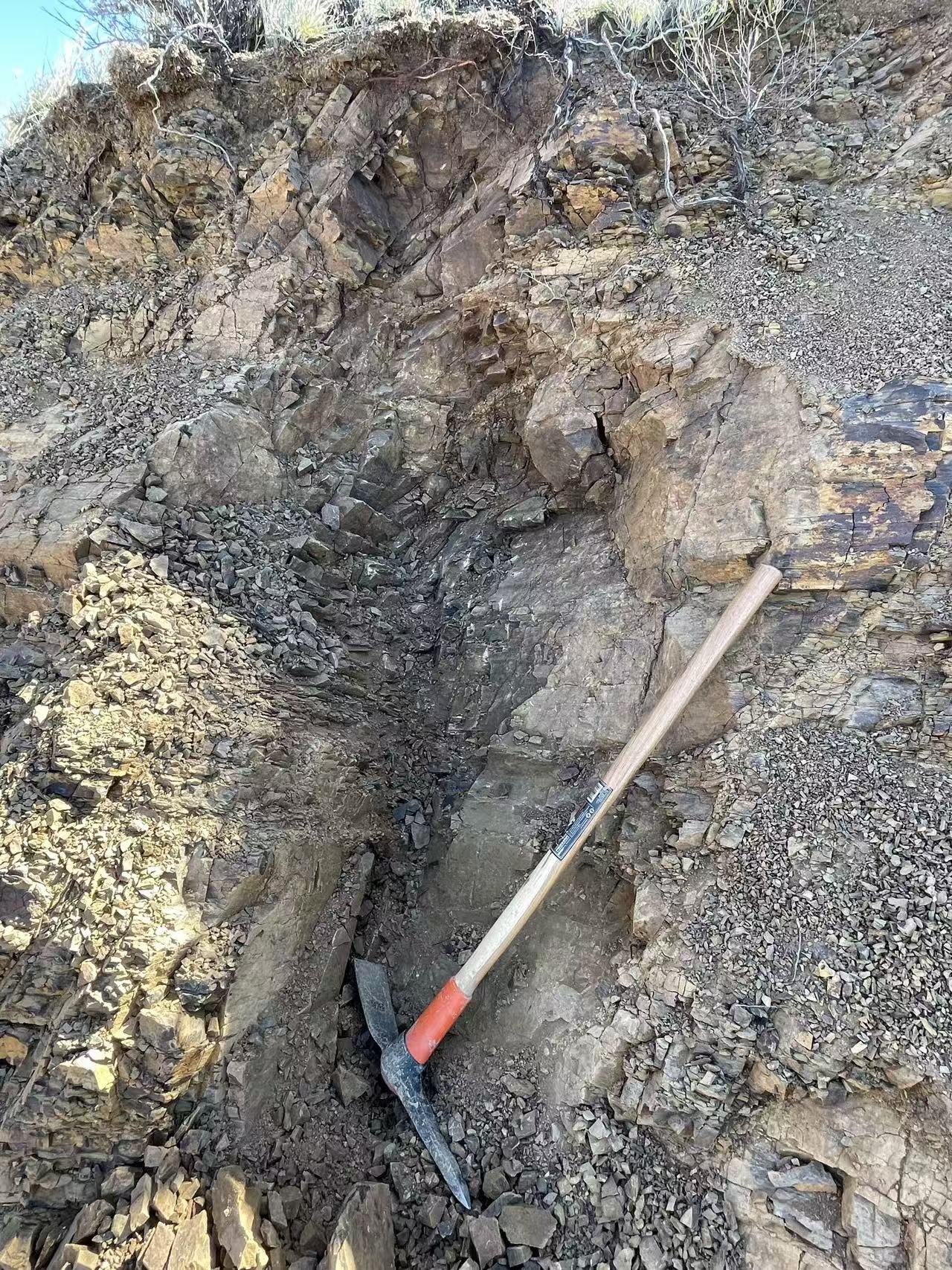
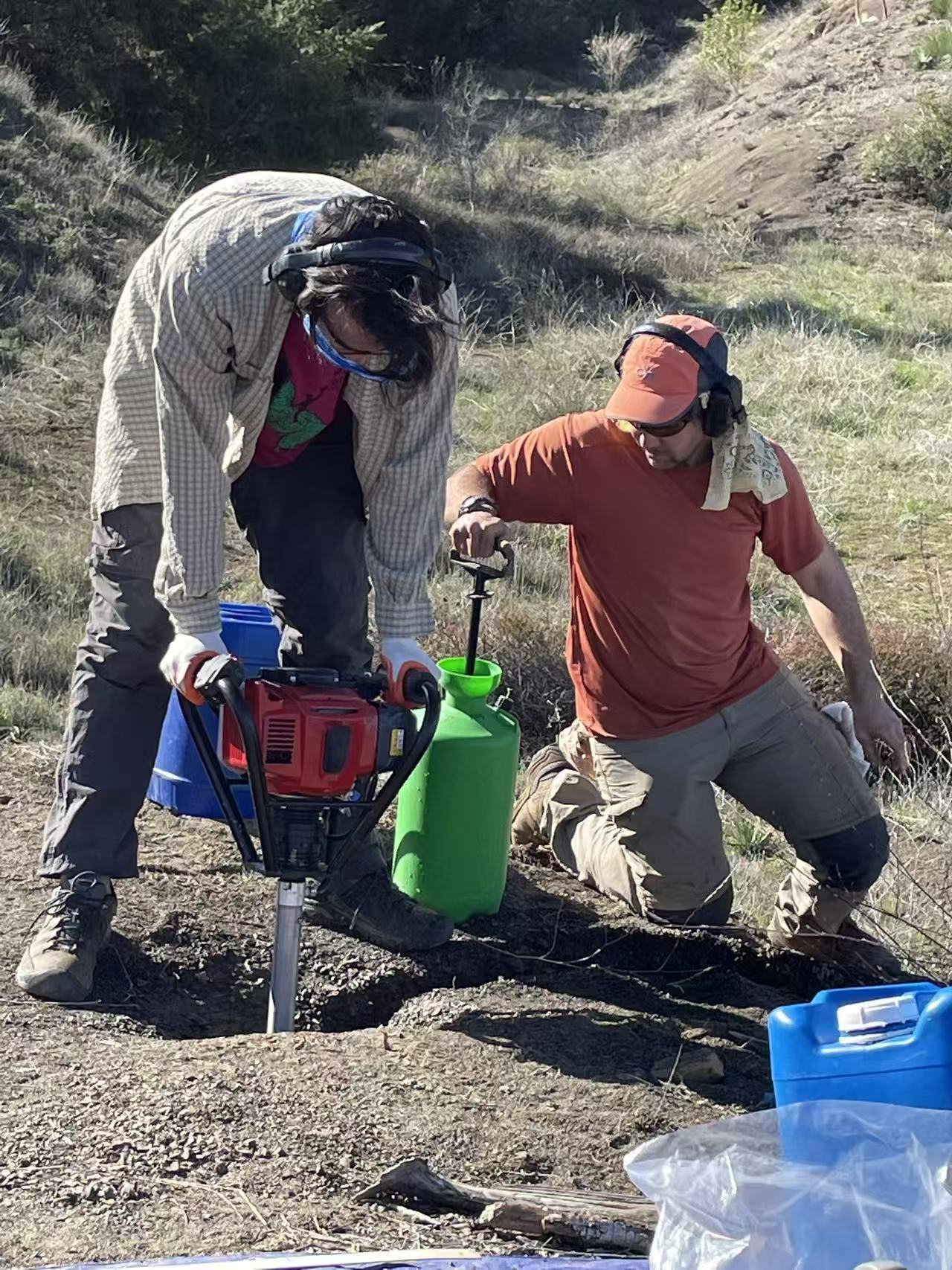
Top left: Seawater Mo adsorption experiment under different redox conditions. Bottom left: Stream sampling from a mudstone-dominant watershed (by Joel Scheingross from UNR). Middle: Mudstone weathering profile. Right: Backpack drilling (by Joel Scheingross from UNR and Mark Torres from Rice).